
Power interruptions are more than just an inconvenience. In industries, hospitals, commercial buildings, and data centers, even a few seconds of downtime can lead to production losses, equipment damage, and operational disruptions.
This is where an AMF Panel plays a crucial role.
An Automatic Mains Failure (AMF) Panel continuously monitors the incoming utility power. If a power failure occurs, it automatically starts the standby generator, transfers the electrical load, and restores normal power without requiring manual intervention. Once the utility supply returns and stabilizes, the panel safely transfers the load back to the mains and shuts down the generator.
Whether you operate a manufacturing plant or manage a commercial facility, installing a reliable AMF Panel ensures uninterrupted power and improved operational efficiency.
What is an AMF Panel?
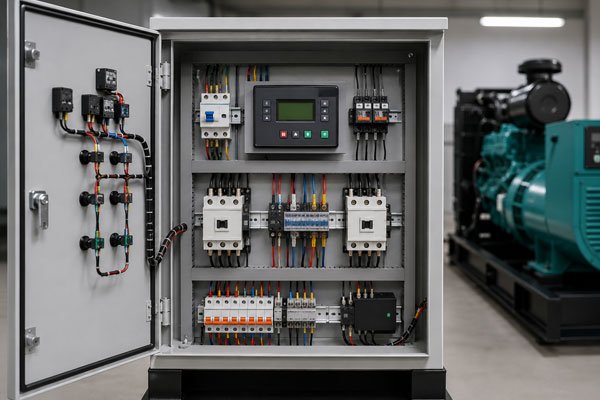
An AMF Panel (Automatic Mains Failure Panel) is an intelligent electrical control panel designed to automate the switching between utility power and a standby diesel generator.
Its primary functions include:
- Monitoring utility voltage
- Detecting power failures
- Automatically starting the generator
- Transferring the electrical load
- Monitoring generator performance
- Returning the load to the mains when power is restored
- Automatically shutting down the generator after cooling
This automation eliminates the need for operators to manually start generators during emergencies.
How Does an AMF Panel Work?
The working process of an AMF Panel follows a sequence of intelligent operations.
Step 1: Continuous Monitoring
The panel constantly monitors:
- Voltage
- Frequency
- Phase sequence
- Phase failure
- Under-voltage
- Over-voltage
Everything stays on utility power as long as the incoming supply remains within acceptable limits.
Step 2: Power Failure Detection
When the mains power fails or goes outside preset voltage limits, the AMF controller immediately detects the abnormal condition.
A short delay is introduced to prevent unnecessary generator starts due to momentary voltage fluctuations.
Step 3: Generator Auto Start
The AMF Panel sends a start signal to the diesel generator.
The generator starts automatically and reaches stable operating voltage and frequency.
Step 4: Load Transfer
Once generator output becomes stable, the AMF Panel disconnects the utility supply and transfers the electrical load to the generator using electrically or mechanically interlocked contactors or breakers.
Step 5: Utility Power Restoration
The panel continuously monitors the utility supply even while the generator is running.
Once stable utility power returns, it waits for a preset delay before switching back.
Step 6: Generator Shutdown
After transferring the load back to utility power, the generator continues running for a cooling period before automatically shutting down.
This extends engine life and improves reliability.
Major Components of an AMF Panel
A typical AMF Panel includes several critical components.
The controller acts as the brain of the panel.
It monitors voltage, frequency, engine status, alarms, and switching logic.
Power Contactors or Circuit Breakers
These safely transfer electrical loads between:
- Utility supply
- Generator supply
Interlocking prevents simultaneous connection of both sources.
Protection Devices
Protection components include:
- MCB
- MCCB
- ACB
- Overload protection
- Short circuit protection
- Earth fault protection
Battery Charger
Keeps the generator battery charged for reliable engine starting.
Relays
Used for automation, monitoring, control logic, and protection.
Metering Instruments
Modern AMF Panels display:
- Voltage
- Current
- Frequency
- Power
- Power factor
- Running hours
- Engine parameters
Benefits of Installing an AMF Panel
Automatic Operation
No operator is required during power failures.
The entire backup process becomes fully automatic.
Zero Manual Switching
Eliminates delays caused by manual generator starting.
Reduced Downtime
Critical equipment continues operating with minimal interruption.
Improved Safety
Automatic interlocking prevents accidental back-feeding and unsafe switching.
Better Generator Protection
The controller monitors engine faults including:
- Low oil pressure
- High engine temperature
- Overspeed
- Battery failure
Lower Operating Costs
Automation reduces manpower requirements while improving energy management.
Reliable Power Backup
Businesses maintain continuous operations even during unexpected outages.
Applications of AMF Panels
AMF Panels are widely used across multiple industries.
Manufacturing Industries
Prevent production stoppages and protect machinery from sudden shutdowns.
Hospitals
Ensure continuous operation of life-saving medical equipment.
Commercial Buildings
Maintain uninterrupted power for elevators, lighting, HVAC systems, and security.
Hotels
Provide seamless guest comfort during utility failures.
Data Centers
Protect servers, networking equipment, and critical IT infrastructure.
Educational Institutions
Maintain uninterrupted classroom operations and laboratory equipment.
Banks
Support ATM operations, servers, and security systems.
Residential Complexes
Provide automatic backup power for common facilities.
Conclusion
An AMF Panel is one of the most important components of any reliable backup power system. By automatically detecting mains failure, starting the generator, transferring loads, and restoring utility power, it ensures uninterrupted operations with minimal human intervention.
Whether you’re managing an industrial plant, commercial facility, healthcare institution, or data center, investing in a high-quality Automatic Mains Failure Panel improves safety, minimizes downtime, and enhances overall power reliability.